Protected: Of Souls & Spectacles
Peachie’s Funeral Parlor


Protected: October Grace
Thorrow
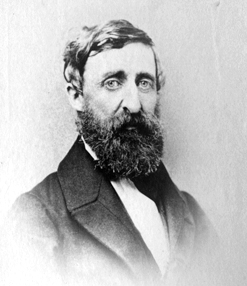
I am remembering a time when I enjoyed life, frolicked in it even, in the quiet way of one who does not yet recognize wonder as unusual or fleeting. My memories really began to coalesce around the age of 16, 17. School was always hard for me, brutally so, and I had no friends to speak of. I never spent the night at anyone’s house or went to a party. When I was a senior in high school, we were released at noon. I did not have a car and so I would walk home from the bus stop and this allowed me time to settle back into myself. I had read Thoreau by then, and I too was unable to find a companion so companionable as solitude.
There was a dirt road behind our house, the road in fact I live on now. Back then there were very few houses, mostly woods on either side with thick waves of black-eyed Susans along the banks in June and raucous brambles of wild blackberries. I would pick these blackberries and take them home to have in a bowl of milk and sugar. I remember I would find frothy white mounds of spit on them, which I assumed had been left behind by snakes and which made reaching down into them just scary enough to be fun. I have never had an aversion to risk.
The road wound in long curves, and at the fork of the second curve there was a dock owned by my grandfather’s cousin, Rosa Christ. Back then I’d never heard of a dock though. We always called them wharves. This is one of the words we said that you don’t hear much now. Words like supper and icebox, mown and dreamt.
Rosa did not live on James Island much of the year, and I could walk down to the end of her long dock and just sit and look at the lighthouse. I might have my tea with me, or a tomato sandwich if it were summer.
At the very end of the road, there was a thick stand of old oaks that fanned out over the marsh. You could reach them by climbing down the shore and walking over the hard mud. This spot had been a trash site at some point in the early 1900s, and it was strewn with glass bottles that had become opalescent with time. My family had three of these sites along the various banks, and you could find any shape or size jar you needed. I used them to carry home the flowers I picked along the way.
I spent a lot of time in these trees. Aside from running, I have never been athletic, but I have always been able to climb without fear. I would climb high into the trees and look across the creek to my parents’ home. I would watch the herons and egrets, the turtles (which we called cuddahs) swimming, the fish and shrimp jumping. Eventually my mom would come home from work and find me missing, and I would sit in the trees watching as she stood on the steps and called my name. I never answered, because I’m sort of a bastard that way. I loved watching the night fall from afar.
Another thing I liked to do was sit on our own wharf. It is stunning the number of things you can see from a wharf. I especially liked to lie on my stomach and watch, through the cracks in the planks, all that was happening in the mud below. At low tide, pluff mud pops constantly, from every direction, as the fiddler crabs excavate their holes. When the water begins to rise, you can lean over the edge and watch the blue crabs come and go sideways. There would often be an assortment of muddy footprints on the wood and in the boats from raccoons, and if you sat on the wharf at night and were very still, the racoons would come out and shuffle right past you. Too, as the tide flowed in, you could watch them fish with their hands from the edge of the mud. Once a passel of dolphins stormed the shore, strand feeding during an ebb tide, which scared the hell out of me. Those suckers make a lot of noise. Another time, while bogging (a thing we did often for fun), we saw with great excitement an electric eel in the bare mud, big and fat and neon pink and green, a creature I did not even know existed before.
Besides swimming in the creek, my dearest pastime was to watch the moon rise in the soft pale blue of twilight. I love all moons, waning and waxing and crescent and half and full and harvest and blue and on and on. It is always the same moon, just as one’s soul is always the same soul.
My two older sisters weren’t around much. I don’t remember them a great deal during this time, and my little sister, Jenny, was more popular and busier than I. Also, she watched a lot of TV. Still I would coax her out and we would go on long bike rides to places no one would ride to now because of traffic. Once on Secessionville at Peas Hill, we got chased by a gang of roosters! There was a tower near there too, built in the center of a wide strip of cleared land where developers planned to (and did) sell million-dollar homes. The tower was many stories tall; I think its purpose was to show off the view. I would climb that tower and there was not a soul in sight, only the lighthouse and Folly Creek. Climbing an oak near there one January, I found myself in the midst of 30 or 40 egrets in their full golden mating plumes. That is a sight I will never forget.
We had a hammock, and it stretched between a dogwood and a pecan. I would take my pillow and a crisp cotton sheet and lie in that hammock for hours. This was one of those old sheets they don’t make anymore. It must have started life a quarter-inch thick, but it had been washed so many times over so many decades that it had become, in a word, impossibly soft. Another thing is, it always stayed cold, even in summer. The afternoon sun would filter through the leaves above, and by then I had heard the term “cathedral of trees,” and I knew that is what I had there. It was my magic place, and what I remember most is the hundreds of shades of green and gold as they shifted and shone and sparkled.
Incidentally this is where I read Gone with the Wind. I reckon I was 16, and when Melanie shot the Yankee on the stairs I was so out-of-my-mind happy, I lept up and hopped all around in the grass. I was so pleased, and I remember thinking to myself, this is the happiest moment of my life. I have had that feeling just three or four times since, but that was the first time, and it was a moment of absolute joy.
Of course, our porch was a big part of life and while I know this is not true, it seems as though I must have spent more hours there than I did in the rest of the house combined. I would simply carry my pillow out there and swing the afternoon away, staring up at the old cove-green ceiling, its peeling paint, and listening to the sounds around me. I heard bees buzzing and the breeze blowing and the wren as it sang, “tea kettle-tea-kettle-tea kettle-tea.” Granddaddy had his sail boat at the wharf then and I would hear its hank ringing against the mast in the wind.
There is one memory of the porch that stands with me more than any other. Sitting in the rocker there, I read the part in Walden where Thoreau explains that the price of a thing is the amount of life you must exchange for it. I remember this exact moment, just as I remember the exact moment I learned Salinger had died, and Dale Earnhardt, and Paul Newman.
The porch was made of concrete that, like my sheet, stayed cool all summer. Jenny has always been up for a game of cards, and we wiled away many long hours stretched out on our stomachs playing ferocious rounds of double solitaire. In the winter, our never-ending quest for dominance continued on the floor of our living room, which was made of heart pine and in retrospect, similarly tough on one’s elbows. During these battles we always listened to Buddy Holly on my parents’ old record player. He was our Big Thing.
(Actually, to be fully honest, I have almost never beaten Jenny at double solitaire. Her hands are freakishly fast. They fly. But we love to play all the same, even now, and she is very sweet as she pulverizes me.)
This reminds me of music. I listened to country music coming up but was the only one in my family to do so. I don’t remember others at school liking it either, despite living in the South. Daddy did take Jenny to see Bocephus while I was off at college, but at home we listened to Otis Redding; Janis Joplin; Peter, Paul, and Mary; and Bob Dylan. There were some others too, but most of all, it was Otis. Other families listened to Christmas carols while they decorated their trees. We listened to Otis. Otis was and remains the dominant cultural icon of our lives. We were raised on him, through and through. If Jesus sits at the right hand of God, Otis must surely sit at his left.
In my bedroom, I had a clock radio and I could listen to country music, or oldies. I liked oldies a ton back then. (And Led Zeppelin, oddly enough.) Besides my clock radio, there was nothing electric in my room. I had no TV, iPad, iPhone, CD player, computer, whatever. We didn’t have a lot of money and my dad wouldn’t allow us to use the heat upstairs in the winter. I did get a ceiling fan when I was in my teens.
My room was the most beautiful room I have ever seen. Now I am an adult with plenty of money, but none of my rooms have ever compared to that one. It was my grandfather’s bedroom when he was a child. He lived behind us, and I could see his light from my window at night, which comforted me.
I had a double white iron bed with fleurs de lis, and we had nothing new so my bedspread had belonged to my great-grandmother Cecee and was white and thin with a raised pattern I don’t know the name of. The sheets were that same old cotton you can’t find nowadays, and they were white with pretty little orange flowers and green leaves at the hem. I had a tall, delicate wooden bookcase that had been ours as children, and on it I kept Walden, Anne of Green Gables, Heidi, my Bible, and The Velveteen Rabbit.
I also kept keepsakes there. I had a metal Aunt Jamima bank that had been my father’s as a boy, which was small but so heavy you could kill someone with it. I had a miniature green table and a set of chairs painted with pink and white flowers. I had ceramic red Snoopy vase from when I was in the hospital as a toddler, a ceramic red elephant that Jenny got for Christmas and I shamelessly stole, and most important, a little hound-dog-standing-in-flowers figurine from the Gay Dolphin in Myrtle Beach. Each year on vacation we got to pick one thing, and how I loved and do love that dog.
My dresser had belonged to my great-great aunt May and was low and oak with an attached mirror that had begun to silver, surrounded by engraved leaves. I made a cream-colored basin and pitcher with my grandmother in an old-people pottery class to sit in the center of it. I had a cypress chest from my grandfather, and my beside table had been given as a gift to my great-grandparents for their wedding. My father has a vase from his maternal grandmother that I used to sneak upstairs and fill with azaleas, camellias, hydrangeas, wisteria, whatever was in bloom. It was one of the only things he had from her, so this subterfuge was high risk. I also had a small mahogany record cabinet I kept fabric in.
Besides my clock radio, its one nod to modernity was a drafting table my mother bought for me to paint on. My poor mother. This was so kind and yet so naive of her. I used the desk for a few weeks, then carried right on painting and drawing and cutting and gluing and sewing on the floor, just as I always had. On any given day, my room was either spotless or strewn with a catastrophe of brilliantly-colored scraps.
I did write at the drafting table, which was something. Having no computer, I wrote everything by hand. I kept a journal regularly, as I did for at least a decade, and I wrote to my best and only friend, Caroline, who lived in Saint George, each day. We couldn’t talk on the phone much because it cost money for long distance. I was even more painstakingly unforgiving of myself then than I am now, and I wrote each letter completely through and then again, a second time, in cursive. If I made a mistake, I ripped up the page and started again.
Our house was surrounded by seven towering pecans which formed a sort of grove. In October, the leaves would turn crisp and copper and fall to the ground. I loved to sit on the roof above our porch and watch them wash down. I remember so intensely the clear crepe blue of those October skies. Picking up pecans in November is, along with sweeping and shucking corn, a chore of which I shall never tire. It is like a gift. It is not work at all.
We spent a lot of time on the water, primarily on Schooner and Secessionville creeks and traveling through Lighthouse Cut to Morris Island. We waved at every boat we passed, and folks don’t do that now, and it makes me mad. We had two main boats, a little metal boat we cleverly called “Little Metal Boat” and a beat-up old 1938 houseboat named Orca. In either case, the bow was my spot, and there is no place in the world as soothing as the bow of a boat at sundown. My father has since had Orca fully restored and she’s a real pain in the ass now, not near as much fun.
So many afternoons I passed at Morris Island in my youth. This was when there were no other people there, just us. My father would pack Slim Jims and pony beers (for him) and we were on our way, Momma waving us off from the wharf. I loved to lean over the edge of the Little Metal Boat and skim my fingers through the surface of the water, watching the droplets rise up and catch the sun. Jenny and I got a big kick out of crossing the wakes, and at night in bed our bodies still rocked to the boat’s rise and fall.
Back then you could still find bricks from the old lightkeeper’s house and school, and Daddy made us gather up and carry as many as we could. It would be hard for me to adequately impress upon you the number of bricks we carried, for miles it seemed. He eventually got organized and brought us all five-gallon buckets, which we carried in one hand with still another pile tucked under our other arm. There was zero mercy. Later I built my first garden out of these bricks, and one day, when I move home again, I hope to build a fountain.
Suffering depression even as a child, my mother shipped me off to my first psychologist at age 16. The first time I went to see her, I sat curled in the chair and for an hour wept without saying a word.
I adored my grandparents and spent a ridiculous amount of time with them. With Granddaddy, I drank lemonade on the steps and built things with wood and saws late into the night in the cavernous workshop with wide open doors. I could build anything as a child. I found scraps of wood in the lumber shed and it never occurred to me to ask anyone for help.
Plants from my childhood (which my mother called “weeds”): Besides the blackberries and black-eyed Susans, there were dandelions and frog fruits and the yellow flowers that ran along the bank by the marsh and cattails and clover and henbit and fleabane and paperwhites and the smell of seaside pennywort (which many mistakenly call dollar weed) after the lawn was mown.
These are just a few memories from the years between, say, 15 and 18. Soon I went off to school where I miraculously acquired dozens of friends, grew downright glamourous, embarked on extraordinary adventures far from the pastoral confines of my youth, and within four years, experienced a series of such crushing losses that my soul withered, cracked, and blew away. It receded deep into shadow, and I could not reach it, and I have spent most of the two intervening decades trying to find it again.
I write this because I need to remember a time when I was happy, when I was, as Thoreau says, a “self-appointed inspector of snowdrifts.” Or in my case, perhaps, wildflowers, weeds, copper leaves, raccoon prints, and snake spit.
 Honky Elizabeth